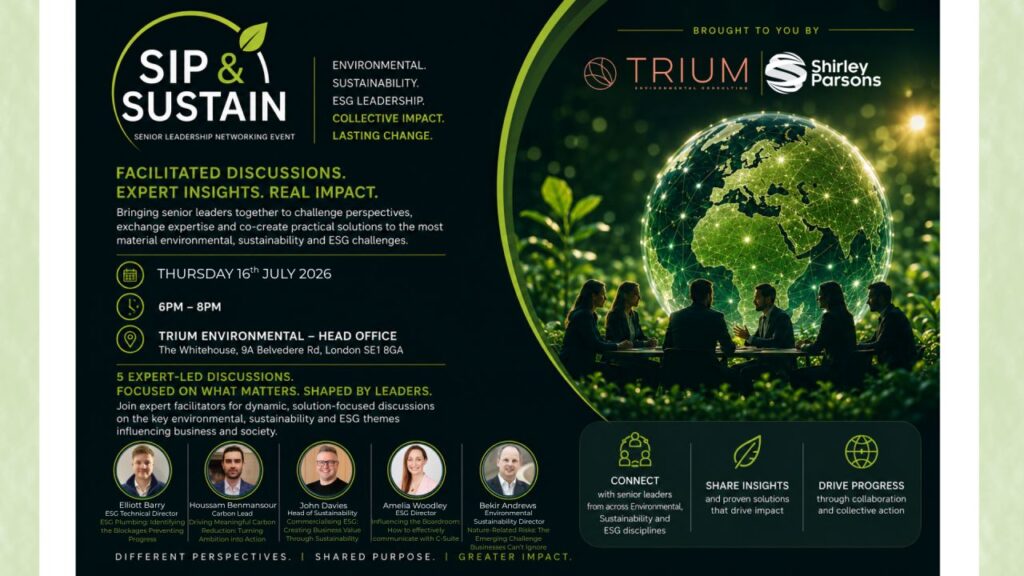
Building on the conversations from his facilitated discussion at Shirley Parsons’ Sip & Sustain event on 16 July, Elliott Barry, Technical Director – ESG at Trium Environmental Consulting LLP, shares his insights into why robust, audit-ready ESG data is becoming essential as reporting standards and stakeholder expectations continue to evolve.
Closing the gap between ambition and evidence.
Our table quickly got into the unglamorous reality of ESG: the significant gap between ambitious corporate targets and the technical “plumbing” needed to support them. We had a lively discussion around how institutional funders, planners and incoming regulations are shifting expectations, moving organisations away from qualitative sustainability narratives towards financial-grade evidence.
A recurring challenge across the table was the disconnect between asset-level technical data, such as dynamic thermal modelling and physical climate risk assessments, and corporate-level disclosures. Put simply, while many organisations are collecting large volumes of sustainability data, very few have built the clear, verifiable evidence trails required to withstand a technical audit. For many, ESG reporting remains ad hoc or reactionary rather than embedded within day-to-day business processes.
Treating ESG data like financial data.
The main consensus from our group was that organisations need to treat technical ESG data with the same rigour as financial accounting.
Rather than waiting for an auditor, planning authority or investor to identify gaps in a disclosure, asset teams should be carrying out upfront diagnostics to ensure everything from Scope 3 supply chain metrics to site-level climate resilience modelling against UKCP18 scenarios is backed by robust evidence.
As scrutiny intensifies across the Living, Energy and Infrastructure sectors, the clear takeaway from our discussion was that success will not be measured by how polished an ESG report looks, but by whether the underlying data and processes stand up when tested.
The cost of getting it wrong.
There are significant risks associated with mishandling or misreporting ESG data, particularly with the implementation of the UK Sustainability Reporting Standards (UKSRS S1 and S2). As scrutiny of sustainability reports and claims becomes increasingly forensic, organisations face not only the prospect of financial penalties, but also reputational damage that could threaten long-term business resilience.
At Trium ESG, we help organisations eliminate blind spots by connecting policy, people and process. We work with organisations to strengthen the foundations of ESG reporting, helping ensure their data is robust, compliant and ready to withstand increasing regulatory and investor scrutiny.
About Sip & Sustain.
Sip & Sustain is Shirley Parsons’ networking series, bringing together sustainability, ESG and environmental professionals to discuss the challenges, opportunities and emerging trends shaping the future of the profession. Each event provides a collaborative space to share ideas, exchange experiences and build valuable industry connections.
If you’re interested in attending a future Sip & Sustain event, we’d love to hear from you. Contact Fraser McLachlan at fraser.mclachlan@shirleyparsons.com to find out more and register your interest.
Related Articles:
ESG Plumbing: Why Audit-Ready Data Matters
Building on the conversations from his facilitated discussion at Shirley