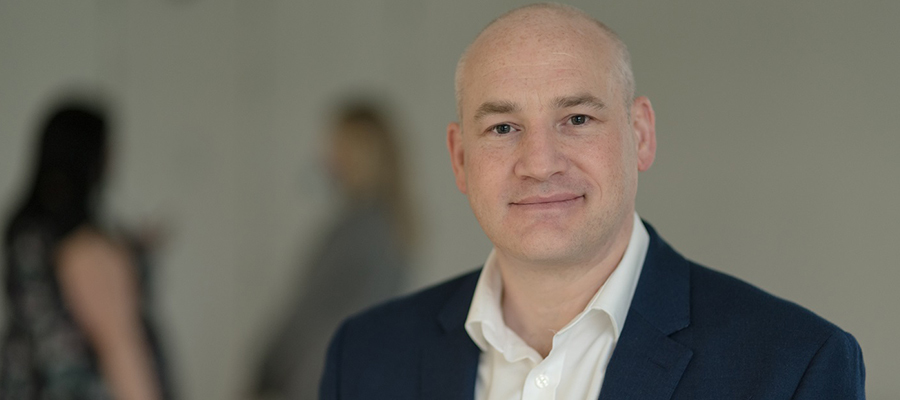
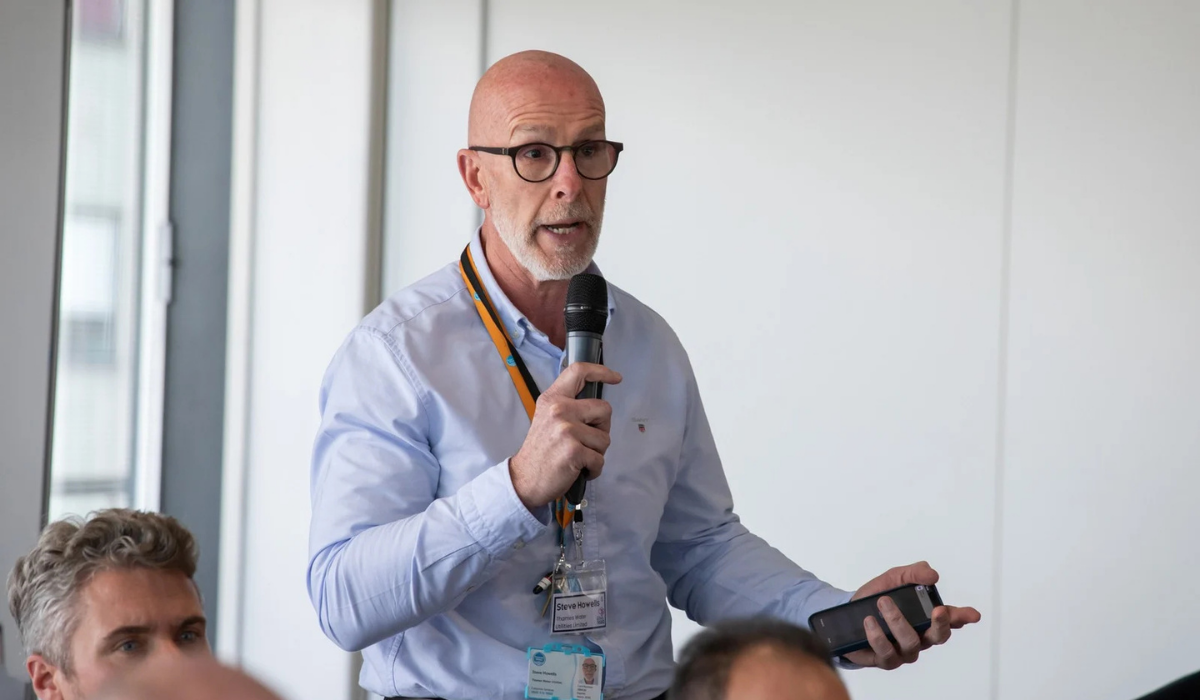
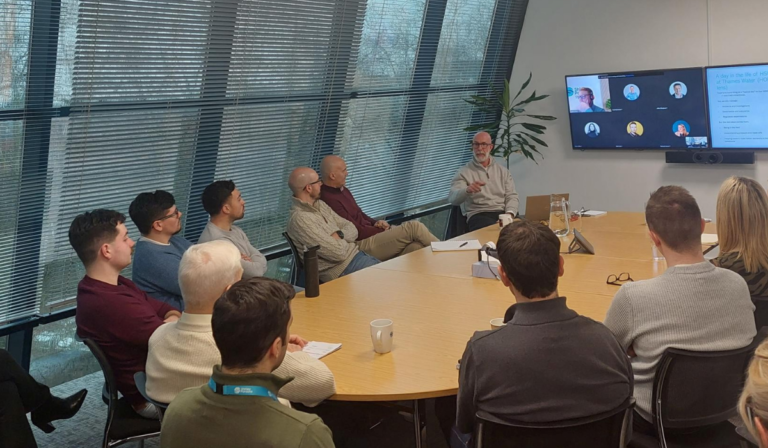
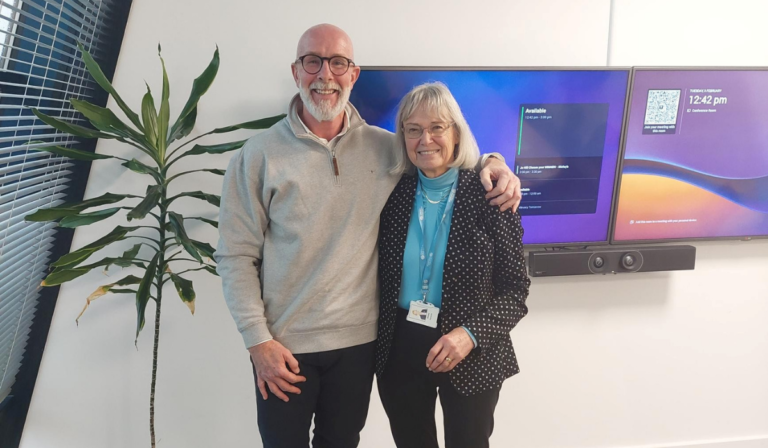
Shirley Parsons was delighted to welcome Steve Howells, Director at Thames Water, into the business for an engaging and thought‑provoking session with our team.
With responsibility for health, safety and wellbeing across one of the UK’s most complex, diverse and high‑risk operational environments, Steve shared candid insights into him, his role, the realities of managing risk at scale, and what truly matters when choosing a recruitment and consultancy partner.
Drawing on decades of cross‑industry experience, Steve’s talk reinforced why strong relationships, shared values and the right mindset are critical to building safer, more resilient organisations.
“If you invest in really big relationships, then you can have really big conversations.”
Working at scale: The reality of risk at Thames Water.
Steve began by setting the context of Thames Water’s operational scale – serving more than 16 million customers, supplying 2.5 billion litres of water every day and managing an over 110,000 km of sewer pipes, supported by thousands of committed colleagues and supply‑chain partners.
With AMP8 representing the largest capital investment programme the organisation has ever seen, Steve was open about the challenges this brings. Given the significance of our critical assets, our leaders consistently strengthen safety and operational performance by integrating robust technical risk management with Human and Organisational Performance (HOP) principles — recognising that systems and context shape outcomes, fostering organisational learning, and supporting proactive stewardship of health, safety and wellbeing across our business
Using learning as the key to improvement: A human centred safety philosophy.
A central theme of Steve’s session was Human and Organisational Performance (HOP), a philosophy that recognises people are fallible and that systems, context and leadership behaviours play a defining role in safety outcomes.
“People make mistakes. We are fallible. We are not superhuman – and that is really, really normal.”
Rather than emphasising fault when things go wrong, Steve encouraged the team to think through a Human and Organisational Performance lens, recognising that:
- people are inherently fallible and don’t come to work intending harm
- actions are shaped far more by the conditions in which people operate, and the tools and knowledge they operate with than by individual intent; and
- curiosity, learning and system improvement drive sustainable performance far more than punishment.
How our leaders respond to incidents, near misses and concerns – with empathy, curiosity, inquiry and a focus on understanding work as it is actually done – directly reinforces a culture of trust, continuous learning and organisational resilience.
“How I respond really matters – because that shapes culture and it shapes capability.” Creating space for honest conversations and challenge, Steve explained, is essential to reducing risk in practice – not just on paper.
Psychological safety: A critical control, not a ‘soft’ concept.
One of the most powerful messages from the session was Steve’s view that psychological safety is a critical control.
“Psychological safety is not a soft concept in our world. It’s a critical control.” Silence, he explained, is one of the biggest risks any organisation faces.
If people do not feel safe to speak up about concerns, report near misses (as well as good practice) or challenge decisions, organisations lose the opportunity to fix problems before harm occurs, or further enhance good practice to ensure resilience.
“If you don’t know about stuff, then you can’t fix it. After all, you can’t fix a secret” Building trust, encouraging vulnerability in leadership and genuinely listening to those closest to the work are fundamental to effective risk management.
Leadership where work really happens.
Steve was clear that meaningful leadership cannot be delivered from behind a checklist. Site visits and engagement must go beyond compliance and process, focusing instead on understanding how work is actually done – not how it was imagined during system design.
By asking curious questions, listening without judgement and acknowledging operational realities such as time pressure and competing priorities, leaders can better understand the gap between policy and practice and take action that genuinely supports frontline teams.
Recruitment, capability and cultural fit.
Recruitment was a key area of discussion, particularly what Steve looks for in both individuals and external partners. While technical knowledge and qualifications are important, Steve emphasised that mindset always comes first.
“Mindset first – always, always mindset.” Curiosity, openness, humility and the ability to engage and influence are qualities he values more than a purely compliance‑driven approach.
He also highlighted the benefits of cross‑industry experience and the importance of recruitment partners who are willing to challenge thinking, influence hiring managers and focus on long‑term capability – not just filling roles.
“I’d rather work with someone who asks brilliant questions than somebody who can just quote legislation and wander around with a very attractive clipboard.”
For Steve, recruitment decisions directly shape organisational culture, making the relationship with trusted partners critical.
A trusted partnership built on shared values.
Throughout the session, Steve returned to the importance of relationships. Strong partnerships, built on trust and honesty, enable open conversations, challenge and better outcomes – whether in leadership, safety or recruitment.
As Steve shared with the team, meaningful progress happens when organisations move beyond transactional interactions and work collaboratively towards shared goals.
Reflecting on his visit, Steve commented:
“Shirley Parsons is, and always has been, a visionary for HSW recruitment, and it’s refreshing to see that remains within its DNA. It was my privilege to have some folk listen to my views about what I hold dear to my heart.”
We would like to thank Steve for taking the time to share his experiences and perspectives.
“Sessions like this reinforce the value of learning from industry leaders who are navigating real‑world risk, cultural change and capability building at scale – and why partnership, mindset and trust sit at the heart of everything we do at Shirley Parsons.”
Shirley Parsons, Brand Ambassador