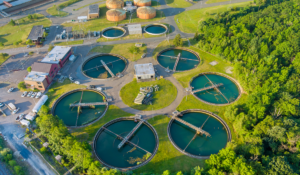

SP Engineering Consultancy is the dedicated engineering division of Shirley Parsons, providing expert support to organisations across the water sector.
Water storage sits at the centre of every water company’s resilience strategy. Whether it’s ensuring supply during peak demand, stabilising pressure across the network, or protecting treatment processes from sudden fluctuations, storage assets quietly carry the load that keeps the system functioning.
Many of these assets, however, are now reaching the limits of their design life. At the same time, new pressures – drought risk, population growth, and regulatory scrutiny -are demanding greater flexibility and reliability than ever before.
AMP8 places storage front and centre: repair what can be saved, upgrade what can be strengthened, and design new infrastructure where the network needs it most.
Aging storage units: can they be saved?
Across the UK, hundreds of service reservoirs, balancing tanks and treated-water chambers are operating decades beyond their intended lifespan. The engineering question is no longer whether they are aging but what can be done with them.
Common issues include:
- cracks, leaks and deteriorating concrete
- corroded steelwork and reinforcement
- compromised waterproofing
- declining internal water quality
- insufficient capacity for modern operational patterns
AMP8 encourages companies to make decisions rooted in data and strategic value. That means determining, early and accurately, whether a structure should be:
- repaired,
- rehabilitated,
- partially reconfigured, or
- fully replaced.
Condition surveys, structural assessments, hydraulic modelling and digital inspection tools are now central to this decision-making. With the right engineering input, many tanks can gain 15–25 additional years of service, avoiding unnecessary capital expenditure while improving operational resilience.
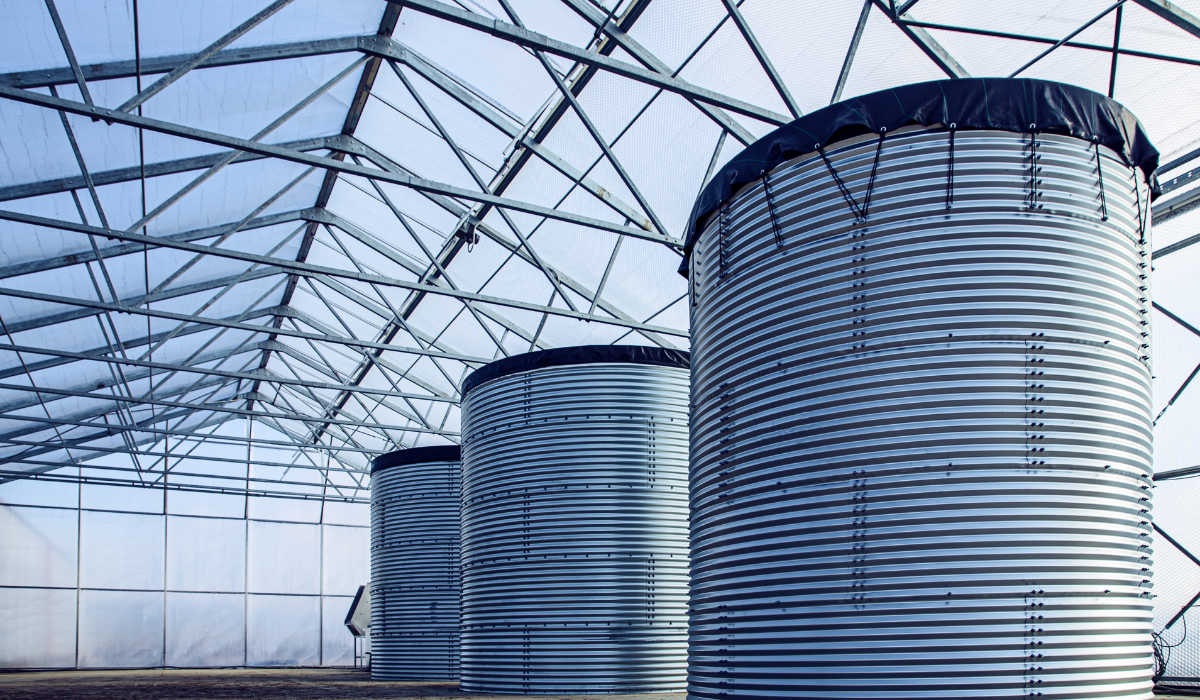
Rehabilitation: the most underrated source of resilience.
Total replacement may look like the cleanest option on paper, but rehabilitation is often the most efficient way to strengthen the network, economically and environmentally.
Typical rehabilitation strategies include:
- internal relining and protective coatings
- structural strengthening
- new pipework, valves and flow controls
- cover replacements and roof repairs
- improved access, safety systems and regulatory compliance
- redesigning internal flow paths to reduce stagnation or short-circuiting
Success here depends on multidisciplinary design. Mechanical, civil, structural and process engineers must work together to ensure:
- minimal downtime
- seamless integration with treatment works and distribution networks
- reliable bypassing
- preserved water quality
- safe working conditions inside confined structures
As Option A and NEC3 packages expand, these rehabilitation-focused design scopes are becoming a major part of AMP8 delivery – exactly the type of design work Shirley Parsons continues to support with specialised engineering teams.
New storage infrastructure: designing for a changing network.
Some assets have simply reached the end of their useful life or no longer match today’s distribution patterns. In these situations, AMP8 investment is shifting towards new, future-ready storage.
Infrastructure-Scale Storage (Infra)
Large strategic tanks and service reservoirs connected to trunk mains or major works. They typically require:
- substantial civil and structural engineering
- hydraulic modelling and resilience planning
- flood, ground condition and environmental assessments
- complex construction sequencing within live networks
Non-Infrastructure Storage (Non-Infra)
Smaller operational units such as:
- modular balancing tanks
- prefabricated service reservoirs
- emergency supply buffers
- local distribution support tanks
These offer quicker deployment and lower disruption, supporting water companies as they strengthen resilience around pressure zones, growth areas and climate-risk hotspots. In both cases, the push is towards flexible, scalable design that can adapt to future regulatory cycles, not simply meet the needs of today.
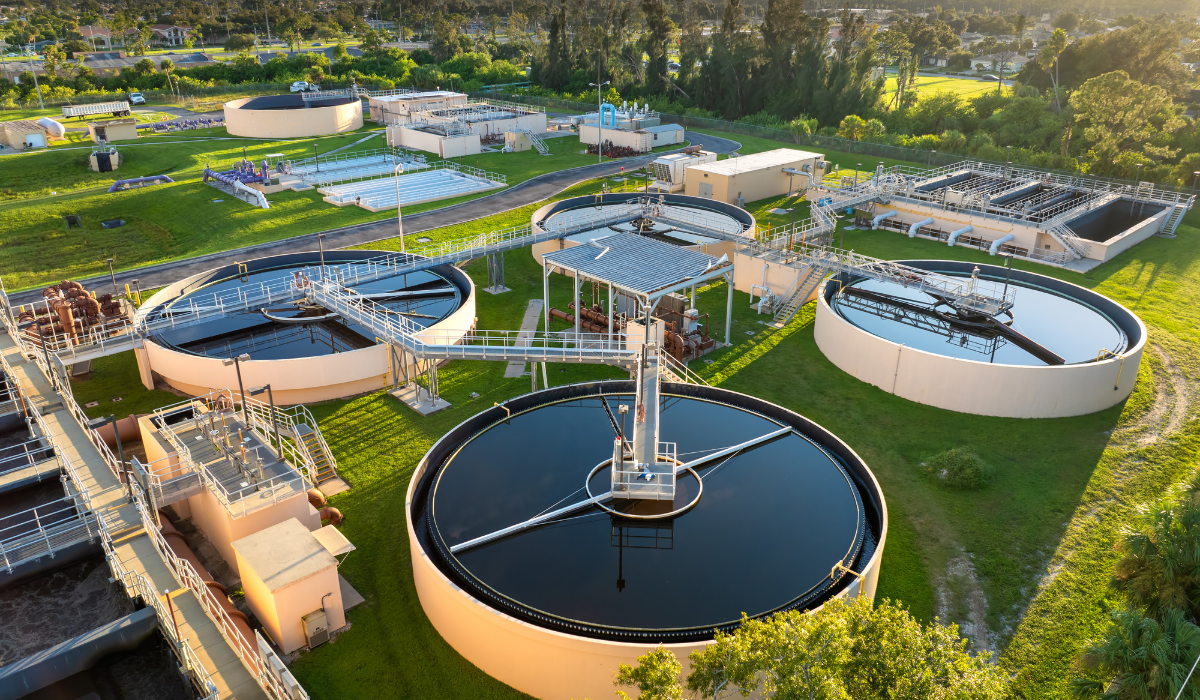
Settlement units: quiet workhorses of the treatment process.
Settlement units often sit just upstream of major treatment stages, quietly performing one of the most critical tasks in the system: reducing solids load, smoothing flow variations and protecting downstream assets.
In AMP8, they are gaining renewed importance due to:
- intensified nutrient removal requirements
- stricter chemical and solids compliance
- increased operational variability from storm events
- the need to optimise bioresource management
Upgrading or designing new settlement systems typically requires:
- process engineering and mass-balance assessment
- mechanical specification for scrapers, mixers and desludging systems
- hydraulic and structural design
- improved monitoring, sensors and automation
These assets may not be headline-grabbing, but they are essential for stable water quality and compliant treatment performance.
Natural underground storage and waterways: A growing opportunity.
Beyond traditional tanks, the industry is exploring natural underground storage as an additional layer of resilience.
These systems include:
- aquifers
- permeable geological formations
- subterranean channels
- legacy underground chambers
They offer several advantages:
- naturally moderated temperature
- reduced contamination risk
- enormous passive storage capacity
- improved drought resilience
However, engineering underground storage is complex. Challenges include:
- limited visibility of subsurface conditions
- strict environmental regulation
- potential impact on ecosystems
- difficulty accessing or modifying formations
Here, hydrogeologists, environmental scientists and civil engineers must work together to evaluate feasibility, designing solutions that respect both water supply needs and environmental obligations.

Storage is the foundation of AMP8 resilience.
AMP8 is driving the sector to think differently about how water is stored, protected and moved through the network. The priorities are clear:
- Extend life where assets can be saved
- Rehabilitate intelligently with multidisciplinary design
- Build new infrastructure that anticipates future challenges
- Leverage natural systems where appropriate
- Strengthen resilience across every part of the supply chain
At Shirley Parsons, we support water companies across the UK by supplying the engineering design capability needed to deliver these storage-focused projects, ensuring each solution is technically sound, operationally efficient and aligned with AMP8 goals.
Get in touch with Teo De La Cruz, our Framework Delivery Director, to discuss how we can assist your programme.
Get in touch
Explore similar insights