Renewable UK Health and Safety conference 2012

On the 1st February my colleague Matthew and I went to the annual Renewable UK Health and Safety conference in Manchester.  It was an excellent, informative and extremely cold couple of days!

One of the speeches that still resonates with me after the conference, was the Opening Address of Maria McCafery.  She spoke about how renewable energies are moving from ‘alternative’ to ‘mainstream’ energy sources. We the UK are on a cusp of a carbon revolution. She spoke about how, in a rapidly increasing market, where we are employing increasing numbers of new workers that it will be hard to maintain a safe working environment.  This to me highlights the importance of health and safety within wind energy, as for this industry to succeed; we need excellent safety professionals to drive it forward.  This is especially important, as Maria pointed out, to combat anti-wind protesters.  As illustrated by the coverage of Scotland’s severe winds this winter, when the media is involved, one incident hurts the reputation of the entire wind industry.

Following this the keynote address of Judith Hackitt of the Health and Safety Executive, highlighted an area which I find particularly important.  Judith spoke about how the rapid expansion of the renewables industry is leading to a skills gap.  This is for me, working in recruitment, a poignant statement.  As a new emerging market there is only a select number of people in the UK that have previous experience within the renewables industry, where will new recruits come from as the skills requirement increases? Will it be a case of training up graduates, or looking for people from the oil & gas, construction or civil engineering industries?  These are the questions that renewables companies are going to have to start asking themselves as without a specific recruitment plan, companies may find it hard to secure a good health and safety culture and high quality health and safety professionals.

Following this, I attended the Design and Project Management session, Leadership & Engagement and What’s Next for Renewables.  I found these sessions extremely informative, and have gained a huge amount of knowledge of the renewable industry, and the part health and safety plays within this industry.

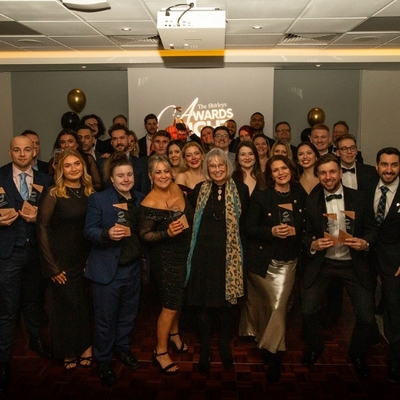
I would like to say congratulations to E.ON Climate & Renewables for winning The Crown Estate Renewable Energy Health & Safety Award for 2012. This was for their shallow gas case study at the Rampion offshore project. Also, another congratulations to Mainstream Renewable Power for their innovation in their Hornsea Met Mast project, and for continuing to strive for best practice.

I look forward to the next conference, it has definitely been one of the professional highlights of my year to date.

Grace Decker- Renewable Energy Recruitment Consultant

Posted in Events | Leave a comment

Road Safety

Recently myself and my colleague Liam Tiddy attended the London IOSH meeting, which focused on Road Safety and Fuel consumption.  This topic was particularly poignant for me as before Christmas I had a fairly severe ice related road accident on my commute to work, so I was interested to hear more about the topic.  Ian Brooks, the initial speaker spoke about London specifically.  He expressed a concern of how London will cope with population increases, where 5,000,000 extra journeys will take place.  One particularly interesting fact was that of all road traffic accidents, 30% were journeys to work.  As a result he expressed the importance of looking at your HSE policy, and whether it covers work related road safety.  This is an interesting question, as this area can be overlooked, he argued that the commute to and from work is the responsibility of the company, not just business related travel.

David Mercer, the second speaker went on to discuss his Masters research in relation to the bus company he worked for.   He argued that in the UK transport companies are not good at carrying out route cause analysis, and that this is key to discovering what we are missing in work related road traffic accidents.  So what did he discover? Well, that to reduce work related traffic accidents you should complete a root cause analysis, recruit good drivers, give them comprehensive training, have robust management systems in place and develop good driving standards, carry out performance reviews and reward safe driving practice.

The meeting provided interesting facts and I have gained new insights into road safety. After having attended several IOSH meetings I feel intrigued as to new areas that potentially could come up. I look forward to my next meeting.

Grace Decker- Renewable Energy Recruitment Consultant
Posted in Uncategorized | 1 Comment

The Athlete’s Village visit

I was recently lucky enough to win a pair of tickets for London 2012. Fantastic! I was pleased to say that I would be going to the Games next year. Disappointingly the event I was seeing wasn’t at the Olympic Park itself. As we have a number of Health and Safety professionals contracting through us at the Athlete’s Village, I thought I would take the opportunity to go and see the build in progress instead.  I have gone past the site on the DLR train before but nothing can prepare you for the vastness and sheer scale of the project. After all, it is one of the biggest construction projects in Europe. At its peak there were 12,000 contractors on site. Now at half that number, it is still hard to imagine the site is winding down soon as it is still bustling with activity.

I arranged to meet one of our recently placed contractors on site on 23rd November. On the train in, the fog was thick. What a day to pick! I wouldn’t be able to see a thing. On arrival at Stratford I was greeted by the new Westfield Shopping Centre, all lit up for Christmas. After being sent in the wrong direction to the Park security gates, I eventually found the right entrance but heard those fateful words – ‘your name’s not on the list’! This was soon rectified by a phone and radio call to the people in the know. Next step – visitor’s pass. I was met by my contractor with handfuls of PPE and a signature to pass me through as a visitor. All kitted out we proceeded to the airport style security checks. I was through!

Surrounded by numerous tall tower blocks built for the Athletes, I was taken out onto site to see what was going on. The blocks themselves are modern and all slightly different in style. Post Olympic Games, these blocks will be sold off to the private and social housing sector with the addition of kitchens which they don’t currently have.  Standing amongst the mud, what looked like a big hole was apparently being turned into one of the ponds in the garden area. Trees were being lifted in by heavy plant equipment. With a cold winter predicted there seems to be concern over the tree’s condition by next year so amusingly they have tree blankets and mulch to keep them warm over winter!

For the rest of the morning I sat in on a site induction for a Slinger Banksman, went to the Lend Lease offices to meet one of our other Health and Safety contractors and had a spot of lunch in the busy canteen. Being one of very few women wandering around site you can’t help but feel a minority. The canteen even serves over-sized portions to cater for the hungry population!

All in all a good day was had. It was a good insight into life on site. Luckily the fog lifted for me and I managed to take a few photos to show the Athlete’s Village and Stadium from a distance. I look forward to the Olympic Games in 2012.

Helen Curtis
Senior Recruiter

Posted in Uncategorized | Leave a comment

WorldSkills London 2011- The opening ceremony

The WorldSkills London 2011 opening ceremony was held on the 4th October at the O2 arena in London, prior to the whole event being held at ExCeL London from 5th to the 8th October.  Shirley Parsons and Kerrie Brindle from Shirley Parsons Associates attended. This is the world’s largest, international skills competition with young people from across the globe competing to be the best of the best in their chosen skill. Around 150,000 visitors saw 1,000 competitors from 51 countries/regions competing in 46 skill areas from cookery to electronics over four exciting days of competition.

The opening ceremony was a great experience with the UK hosts starting the event off with an inspiring presentation. The ceremony was extremely entertaining with acrobatics, flags and brightly coloured streamers representing each country in the UK. The shortlisted countries then proceeded to take part in the ceremony. This event was about raising awareness of WorldSkills, and has certainly achieved that. It was a real eye opener to the talent that is present worldwide.

The WorldSkills London 2011 chairman Chris Humphries and Deputy Prime Minister Nick Clegg made speeches, adding credit to this unique event. The organisers pledged that the games would be carried out in an ethical manner. WorldSkills unites the world, with the creation of a positive and motivational atmosphere.

Having supplied the Health & Safety Manager & several health and safety volunteers to work during the competition, it was fascinating to see how the whole event came together and how all the hard planning work achieved success.

The H&S team played a crucial role in ensuring the competitions took place in a safe environment by undertaking H&S inspections of all 46 skill workshops, prior to the competitions being permitted to start and intervening where unsafe practices were observed during the competition. One of the biggest challenges the team had to overcome was ensuring all electrical hand tools imported for the competition were tested for electrical safety and toolboxes checked for  any hazardous substances. Often dealing with language barriers, the team successfully achieved these checks, with 3,500 tools being PAT tested over 2 days.

I would like to thank the organisers for an inspiring Opening Ceremony.  Shirley  Parsons Associates were glad to have been a part of this great event. I’m sure that lessons learned will be of benefit for the London Olympics.

The results are as follows:

Team UK won 13 medals in total, more than ever before. The medals won were:

Gold in Cooking, Bricklaying, Plumbing and Heating, Stonemasonry and Visual Merchandising

Silver in Autobody Repair and Landscape Gardening

Bronze in Automobile Technology, Car Painting, Joinery, Mechanical Engineering CAD, Refrigeration and Air Conditioning, and Welding.

Medallions for Excellence were awarded in Beauty Therapy, Carpentry, Confectioner/Pastry Cook, Electrical Installations, Fashion Technology, Floristry, Graphic Design Technology, Ladies/Men’s Hairdressing, Mechatronics, Plastering and Dry Wall Systems, Restaurant Service and Web Design.

This haul put the team fifth in the WorldSkills table, the best Team UK has ever achieved. 60% of Team UK have attended an FE College and 63% are Apprentices.  If you want to look at the results in more detail, go to http://worldskillsteamuk.org/

Posted in Company news and updates | Leave a comment

The National Food & Drink Manufacturing Conference 2011-10-10

Off the back of the major political parties conference season, it was the turn of the IOSH Food  & Drink Manufacturing group to host theirs in the historic city of Nottingham. Although there was no mass media ranks at the Nottingham Belfry and no ‘grand-standing’ from the speakers; there was undoubtedly a huge amount of passion within what was a record-breaking conference in terms of attendees.

The previous weeks sunny weather had given way to a more autumnal feel, but this didn’t put off the delegates who had come en masse to the event. It was a great mix of HSE professionals from all levels  in the industry, who were all happy to share ideas. The first part of day one set the scene for the two day conference, with key speakers from the industry discussing the challenges ahead for the coming months.  After lunch, there were several further speakers, which highlighted day-to-day issues of HSE Management and gave food for thought to areas of improvement and practical solutions, on issues such as workplace transport and the safety of night-time cleaning contractors.

In the evening there was chance for dinner and it gave time for the delegates to talk through the topics discussed and how it may be relevant to their organisations. During the dinner there was also an awards presentation, for best practical HSE incentive with the Food & Drink sector. This was won by Mark Edwards of Speedibake for a practical solution to PPE issues on a multi-lingual site.

Day two started with presentations by the award winner from the night before, along with the two runners up who were Alan White from Allied Bakeries and Nicola Callaghan from Nestle.  The presentations were warmly received by the audience and all highlighted how practical safety solutions are successful when everyone buys into a positive mindset. It was clear after speaking to others at the interval, that these incentives impressed and many other companies felt they could learn from these programmes. After lunch there were a number of entertaining and informative presentations around engaging others to develop best HSE practice. The presentations by Bernie Catterall and Gerard Hand were particularly passionate and enjoyable, and brought an end to a very successful conference.

The overwhelming message that came across was that engaging others wasn’t rocket-science but needed HSE professionals with passion and the ability to make the subject relevant to the entire workforce. ‘Keep it Simple’ seemed to be the watchword for the event, and hopefully the messages from the presentations will be used practically in the forthcoming year. I certainly will look forward to returning to the Conference in 2012.

Liam Tiddy
HSEQ Recruitment Specialist

Posted in Events, Uncategorized | 1 Comment

Negligent employers believed to be the biggest challenge facing the health and safety industry

We recently ran a poll amongst health and safety professionals asking what they believed to be the biggest challenge facing their industry. The results show that those within the industry believe that it is negligent employers, looking to cut corners in the recession.

Click on the pie chart to see a full size image.

Posted in Legislation and Guidance, Uncategorized | Leave a comment

Advice on Writing your CV

There are many ways to write a CV correctly and include the information that should go in it. The following guidelines will give you a good idea of what you should do to ensure your CV is the best it can be.

Introductory details:
After beginning your CV with your name, address and contact details at the top (there is no need to write CV or Curriculum Vitae as a title), continue with a brief paragraph of personal ‘profile’ or introduction, describing your work ethic and some of your main positive qualities in order to capture the reader’s attention. You should also very briefly cover your career background so far (if any) and where you intend it to go. Explain why you are applying for this job, remembering to always be positive in this section. Avoid jokes whether they are subtle or obvious and never directly criticise a previous employer or firm. Saying “I have just achieved X qualification and am seeking to develop my career,” is good, but do not say “I want to get out of this rubbish job because I hate my boss and it’s boring and I want anything that’s not here!” Do not go into too much detail in your introduction as you can put more detail in the following sections. The employer is interested in what you can do for them so stating in too much detail what you are looking for is of no interest to them and may make them think you are inflexible on your career path. Note that in your personal details, it is up to you whether you wish to include age, nationality, marital status, etc, as these ought not to affect the consideration of your CV.

Employment History:
There are two main ways to arrange the next section of your CV, covering your employment history and what skills/responsibilities you had. For those with a lower number of previous roles in their career history, it may be beneficial to create a chronological employment history, starting with your most recent role and working backwards. Head each role with your job title/position, the company that you worked for (and if it is not clear from their name, the sort of company that they are or industry that they work in), where you were based (town/county) and the dates between which you worked there. Under each of these headings you can then itemise your day to day tasks, the skills you acquired and your responsibilities. Use a combination of short paragraphs and bullet points if there is a lot of information to relate.

However, this layout can often push your CV to well over 2 or 3 pages in total, so you may want to try the alternative. Write an employment history with only the headings (outlined in the previous paragraph) as bullet points. If necessary add a few words of explanation if the bullet point doesn’t clearly summarise the role. Then follow the employment history section with a key skills/responsibilities section in order of significance/relevance to the job for which you are applying. This can prove a more concise way of detailing skills that you may have used in several of your previous jobs by avoiding repetition. Remember that whilst it is important to sell yourself and emphasise your positive contributions, do not embellish the truth too far to make it look as if you have achieved successes or tasks which you have not. However you must find a balance between exaggeration and modesty, as playing down your achievements is equally detrimental. Identify what your potential employers goals are (a safer working environment? profit? market expansion?) and show how your skills will help them to achieve those goals. If you have little work experience you may wish to put your summary of your education a qualifications before the Employment History. This may also be a good idea if the job description emphasises a need for specific qualifications. Whether you decide to put this section before or after, remember to include the full title of the qualification, the institution where it was achieved and the dates that you studied/achieved it. Depending on its duration/validity, work experience can be put either along with education or along with the employment history. It is acceptable to have gaps in your employment history but you must make sure that you put at least a small explanation in so that they so not look suspicious. Keep explanations as positive as possible but do not lie.

Additional Information:
Lastly, under appropriate headings (e.g. Additional Information); add any extra skills or information that may not have been covered so far. This may include foreign languages which you speak and at what level, whether or not you have a driving licence and what type it is, etc. If you wish to include hobbies, make sure they are a good reflection on you and not too generic. Try to make any skills you highlight sound transferable. Specific skills such as a good knowledge of Microsoft Excel may not be relevant to this role, but an ability to learn new IT packages quickly or to clearly communicate when teaching are applicable to most jobs. If you can back these claims up with examples or figures from previous roles, this is even better. It is best not to put reference contact details straight onto your CV but state ‘references available on request’. This way you save space on your CV and you will know when references are being taken on you because you will have to be contacted for details.

Posted in Articles, Recruitment News | 1 Comment

Why 3 is the magic number when it comes to writing your CV

There are three C’s to remember when writing your CV:
• Clarity
• Conciseness
• Consistency

1. CLARITY
Make your CV easily readable and space it clearly with distinguishable section headings. It is highly recommended to aim for 2 to 3 pages in total, as you want to make the document useful not only to those who want an in-depth and detailed history but also to those who are likely to just skim-read your CV to get a general idea of your suitability. Unfortunately some HR departments and secretaries will barely look at the CV but rather scan it electronically for key words, so it is important to make sure these are in there and used as clearly and regularly as is appropriate. This is not always the case of course so it is important for it to be coherent too, especially for when it is to be put forward to interviewers at the next higher stage. Once your CV is complete, ask a friend to read it, as a second pair of eyes can identify areas of difficulty that may be clear to you but not to others. Between you, you may be able to remove clichéd buzz-words, unfamiliar abbreviations and filler phrases and settle on a tone that is polite and respectful. Unless informed otherwise, it is not always safe to assume that the first person to read your CV will be an expert in the industry.

2. CONCISENESS
When writing your CV, keep in mind that it is the very first impression that you will be giving to a potential employer. You may have many interesting skills or achievements from your career, but it is important to identify those which are relevant and noteworthy over those which are standard and emphasise them accordingly by relating them back to the job description if possible. The content should also be relevant to the job for which you are applying. Read all the information you have about the role thoroughly so you know it inside-out and then tailor the information in your CV accordingly, emphasising relevant skills and experiences and omitting irrelevant information such as jobs that are entirely different from the one you are seeking. However, don’t dismiss seemingly mundane tasks too readily. If they are integral to the day-to-day functioning of the company, try to relate that.  Your CV is a means to getting the interview, not to getting the job straight away, so give enough information to capture their attention and give them questions to ask in your interview. Once you have the interview, you will be able to go into greater detail in the areas where they want you to do so.

3. CONSISTENCY
Consistency in writing style and presentation are important. Do not use too many differing fonts and spacing styles but aim for clear simplicity. It is also best not to depend on colour to distinguish sections or heading as not everyone uses a colour printer or photocopier. Instead you can embolden or underline headings or make the font slightly larger, but try to keep these stylistic techniques to headings only, otherwise they begin to lose their distinction. Check and double check your spelling and grammar, both with the program’s spell-checker and yourself. If you can find someone to proof read your CV as well, even better, because there is no excuse and mistakes will make you look careless or unintelligent to the employer.

Above all you must remember that the picture of yourself that your CV paints must be accurate and relate to what the interviewer sees and learns of you in the interview. If you have oversold yourself in your CV, it may be painfully obvious to the interviewer and they will dismiss you in their minds before the interview is even over. Underselling yourself will lose you the interview in the first place.

Gemma Turner
Marketing Manager

Posted in Articles, Recruitment News | Leave a comment

Business Lessons Learned From The Recession – read Shirley’s chapter here

Shirley Parsons has recently contributed to a great new book which is available as a free download from http://bit.ly/iTmK7t. The book is called Lessons Learned from the Recession and is the first in a series of books aimed at aspiring and proven Business Leaders around the world. To find out more and share any feedback, check out: www.thebusinessleadersbookclub.com.

In the book, 60 carefully selected business leaders share their personal experiences of what they have learned from the most recent recession. The chapters are a mix of success stories containing personal stories interwoven with detailed practical advice.

You can read Shirley’s chapter here, where she looks at the lessons learned from the recession whilst offering advice on how to mitigate its effects.

To read all of his points and the other 59 contributions, you can download ‘Lessons Learned from the Recession’ for free from www.theebooklibrary.co.uk.

Chapter 50: 30 years of Operating and Consulting: A Reflection

The current recession marks our third experience of operating in a recession in the UK. Back in 1979 we started our first two businesses going into a recession although we were very naive then. We didn’t actually realise we’d been in a recession until much later on, we just thought the trading climate was what it was.

It wasn’t until the 89-92 recession that we began to understand what going through a recession was really like. At that stage we had two businesses – Sypol, the environmental and safety consultancy, and S-Com, the technical agency and computer systems and products house. August 1989 marked the end of the property bubble of that era and prices were about to fall off a cliff. I remember addressing everyone in the group and announcing that we were about to go into recession, but we still didn’t really know what to expect other than things would get tough.

However new business dried up substantially, we had to release people and we all had to go back to developing as much business as we could – everyone became hands on. At the same time we were able to strengthen Sypol by merging with another small specialist consultancy and we decided to focus on the recruitment side of our ICT business and set about selling our systems house and communications products businesses.

The end of recession came as rapidly as the start. In March 1992 the tap came back on and having disposed of our systems house and products businesses and with Sypol operating autonomously with a new management team, we were well geared to expand rapidly. Both Sypol and S-Com grew rapidly throughout the 1990s and towards the end of the decade we sold both businesses.

This was followed by working earn outs and latterly, by a period as investors in a range of diverse entrepreneurial businesses. Then in 2005 we decided to start again on our own by forming The Identify Group. Our first group start up was a Health and Safety recruitment business, named after Shirley as by that time she’d become a brand in her own right. This was followed in 2008 by the addition of Kineticom Ltd, acquired from sister company Kineticom Inc. along with Malik Shaw – a small public sector agency.

We all heard Alistair Darling’s warning at the end of August 2008 about the worst conditions for 60 years, but at that time we weren’t seeing any effects feeding through. Even at the end of 2008 at our annual planning sessions we were asking “what recession?”. Indeed it was not until mid 2009 that trading conditions began to deteriorate rapidly and we felt the effects in both our health and safety and our ICT and Telecoms sectors. The Public Sector still continued to perform well though.

It’s fair to say that with the exception of those in the public sector, all of our staff began to understand what being in a recession was actually like. Then having planned for a flat year, 2010 has turned out to be good for all of our businesses. ICT/Telecoms was a little slower to get going, but Health and Safety hit the ground running and the first three quarters of 2010 were the best we’ve had.

So is it all over? We don’t think so. We’ve taken to engaging with the economic forecasters at the banks and we’re strongly influenced by the way they see things. We also meet regularly with our relationship mangers just to exchange views on how we all see things shaping up. The best view we have is that opportunities will still be there in 2011 and growth is possible, but expect a rocky road.

The main lessons we’ve learned from the previous and the current recessions concern the behaviour of finance providers. In 1987 our bankers had persuaded us to drop our invoice discounting arrangements in favour of a new offering direct from themselves. But by mid 1989 they were already getting nervous, bringing in new restrictions and generally making life difficult before finally announcing that they wanted out.

What had been a cordial relationship became one of mistrust. With the help of a former banker, we bought some time and managed to find a much better deal with a specialist invoice discounter. That relationship was also tested when one of our major clients – Ferranti – went bust, creating a £250K hole in our cash flows. The response of our new partners was to impose an overall reduction in our facility, leaving us to find more funding from private means, which we duly did and the relationship then got back on an even keel.

Similar behaviours came to the fore again in 2009. Our invoice discounting partner became very nervous and pernickety and was looking for holes in everything we did. They tried to unilaterally change the terms of our loan facilities in a really underhand way. We caught that one, but they won in the end because they invoked a change clause by claiming a breach on our part after a small error in one of our reports. Over the period, we went from being their biggest fan (and best reference site) to being their most vociferous detractor. We managed to terminate the relationship by mutual consent in 2010 and strangely our facilities are now with our High St bank (RBS) who we’ve been with ever since 1990 and who have been supportive through all of the ups and downs we’ve had over the years.

So the lessons learned are: -
• Recruitment businesses are usually first in and first out of a recession
• Property bubbles frequently precede a recession
• Banks and finance providers see the recession coming before we do
• When a recession comes many bankers show another side – not always an honest one
• If and when you do hit problems, expect the finance providers to give you a further stress test
• Long term relationships do seem to matter – but don’t bank on it
• It’s hard to call the start or the end of a recession in advance – just be ready to act
• Staff loyalty helps enormously

To mitigate the effects of a recession: -
• Create an operating cost base that is as flexible as possible
• Aim to create balance sheet strength that will enable you to withstand a ‘sizeable’ bad debt or trading losses
• Gear your business to have sufficient ‘headroom’ – avoid always being at the limit
• Try to spread the client base so that you are not overly dependent on a few large ones
• Be extra diligent with credit control and debt collection
• Be open internally – involve your staff more and keep them onside – you’re all in it together
• Help your staff to make sensible financial plans and not to over-commit when the times are really good, unless they have a strong personal balance sheet with good sources of liquidity.
• Know your sector cycles – some are cyclic with a recession, some are anti-cyclic and others depend more on sector investment cycles that are independent of recessions

Finally where are we now? Our figures are slightly better than they were in 2008, and we’ve moved our 5 year plan out by a couple of years. We’re cautiously optimistic about 2011 but we still have a higher degree of uncertainty than we would like. Our balance sheets are stronger now than they were last year and we have an excellent team. Let’s see what the markets do.

Addendum
Supplementary facts and figures: -
• In August 1989 we had approximately 120 contract staff working through S-Com.
• By March 1992 The number of contractors working through S-Com had declined to around 75
• In July 1997 when we sold S-Com, we had approximately 550 contractors on fees.

Throughout our time at S-Com we always supported the defence and telecoms industries and grew rapidly in the 90s in both of these sectors. The award of new mobile operator licences helped fuel the rapid growth during that period, as did the award of List-X for military work.

Posted in Guest Blog, Recruitment News, Uncategorized | Leave a comment

Photos on your CV – Good or Bad Idea?

We are often asked here at Shirley Parsons Associates whether including a photo of yourself on your CV is a good or a bad idea. This is certainly a topic that causes heated discussion, and the truth is that there is no definitive answer; it boils down to opinion!

Many would suggest that including a photo within your CV is a bad idea for two main reasons. First of all it should be your experience and skill set which get you the interview not your appearance so it is these aspects that you should be concentrating on and drawing attention to, not how you look. So the answer is to let yourself be judged on your experiences and skills, and simply not include your photo at all. Secondly most recruitment agencies or HR departments will use databases for recording candidates CVs and details. If you have a photo on your CV it can often cause problems when it is uploaded onto these systems, when the file can become corrupted, which can leave your CV not looking the way you intended it to.

However there is now a compromise in the argument for photos on CVs, and it comes in the form of the social networking site, LinkedIn. For job seekers I would certainly encourage using the business focused site LinkedIn. Not only does it give you another channel to use for networking and job seeking purposes, but it also allows you to post an online business profile, including a photo of yourself. When adding this photo it is important to remember that the photo you use should present yourself in suitable and applicable business wear – not dressed up to the nines on a night out on the tiles for example. Once you have a complete profile, photo and all, you can put a link on your CV to your LinkedIn profile, which recruiters and hiring managers may choose to visit or not. This way the photo does not corrupt your application or detract from the content of your CV.

So in conclusion, try leaving your photo off your application and instead work on a LinkedIn profile that helps highlight your skills and suitability. To find out more about LinkedIn and to learn how to get the most out of it, visit their learning centre http://learn.linkedin.com/new-users/

Posted in Legislation and Guidance, Recruitment News, Uncategorized | Leave a comment